
Google Ads Bidding Made Simple
Think of Google Ads bidding like deciding how you’ll pay in an online auction. Your ad competes with others, and the way you set your bidding strategy tells Google what matters most to you — whether that’s clicks, sales, revenue, or simply visibility.
🏷️ The Basics: How the Ad Auction Works
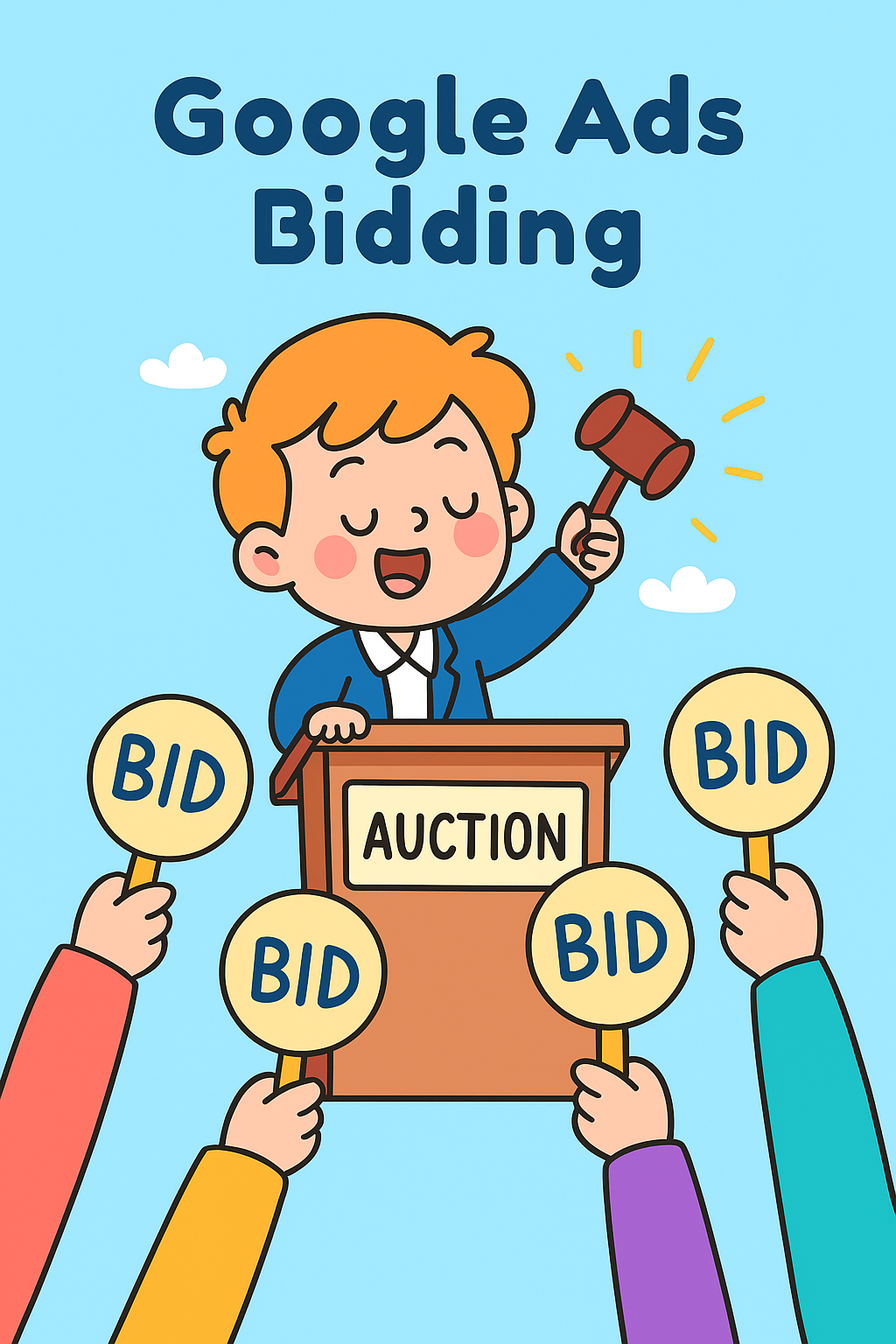
Every time someone searches on Google, a lightning-fast auction takes place. Advertisers “bid” to show their ads for that search.
Your bidding strategy is basically your instruction to Google: Do you want more visitors, more leads and sales, or just more people noticing your brand?
🎯 Common Bidding Strategies Explained
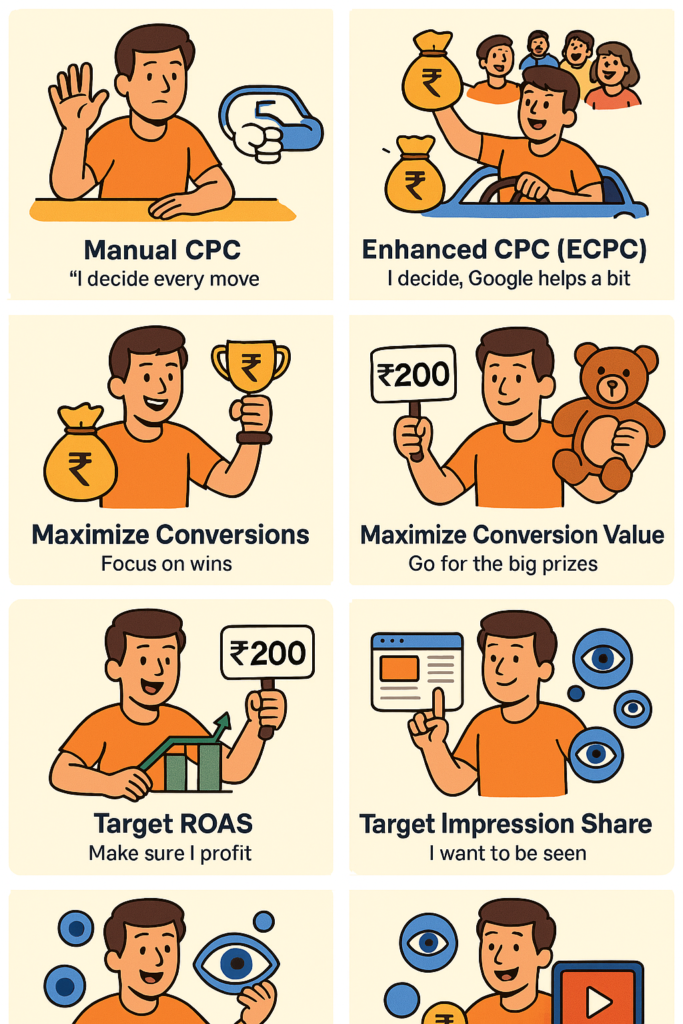
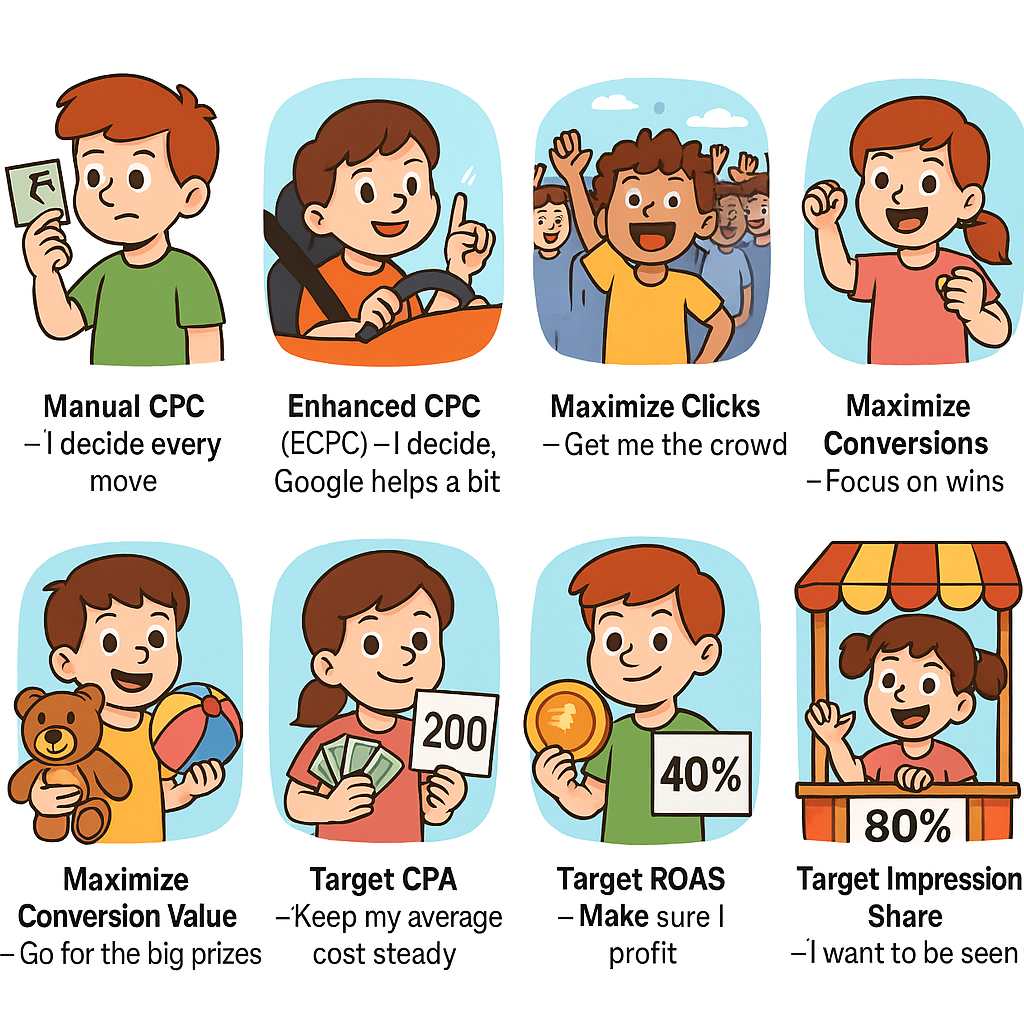
Manual CPC – “I control every bid”
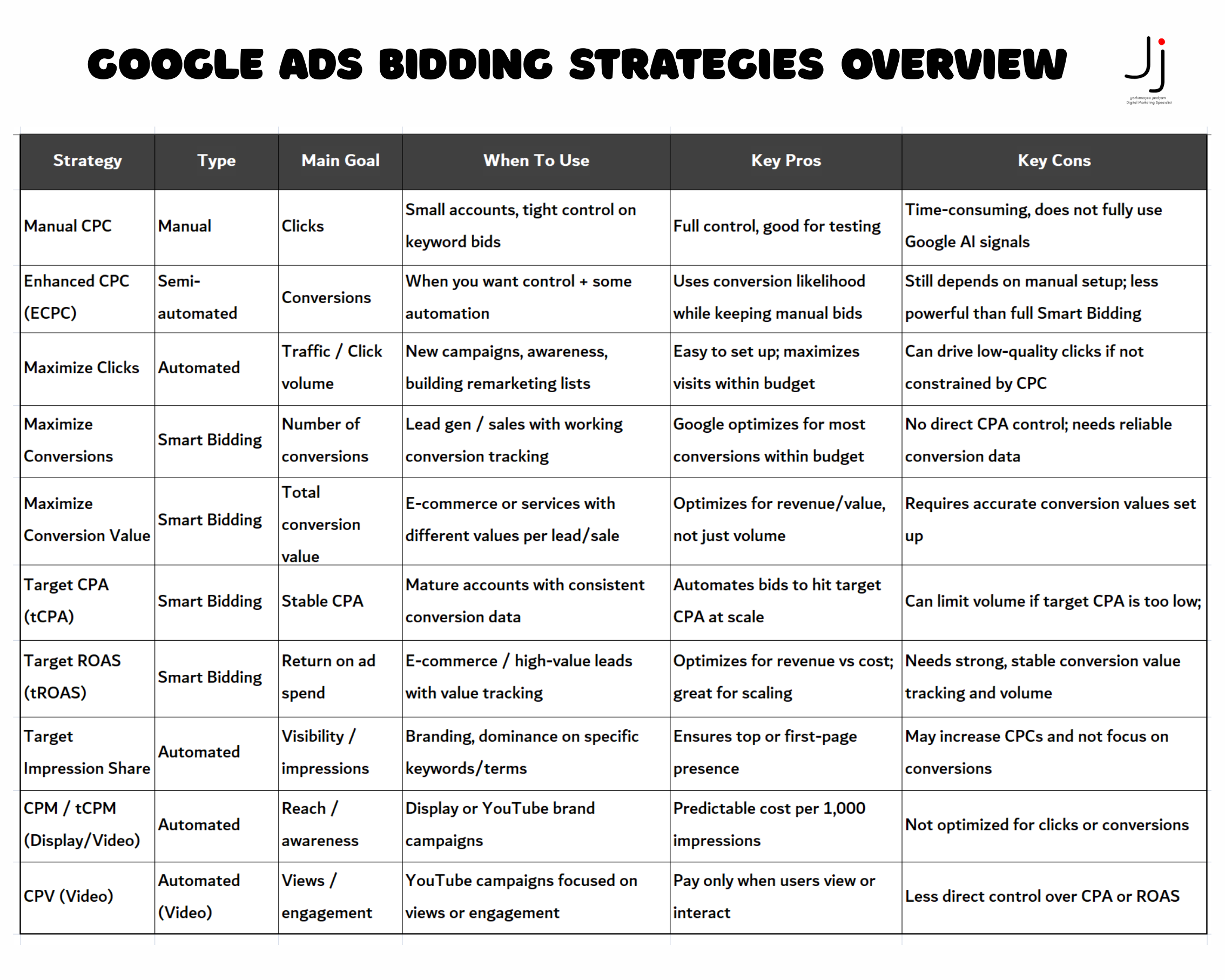
You set the maximum amount you’re willing to pay per click (e.g., ₹5 per keyword). Great if you want full control, but it requires hands-on management.
Enhanced CPC (ECPC) – “I control, Google fine-tunes”
You set bids, but Google can slightly raise or lower them if it predicts a higher or lower chance of conversion. Think of it like you driving, with Google making small steering corrections.
Maximize Clicks – “Get me the most visitors”
Google uses your budget to bring in as many clicks as possible. Best when you want traffic and data quickly, even if cost per conversion isn’t tightly controlled.
Maximize Conversions – “Focus on leads and sales”
Maximize Conversion Value – “Go for revenue, not just numbers”
This strategy looks at the value of each sale, not just the count. For example, selling a high-ticket product matters more than a small one. Google aims to maximize your total revenue.
Target CPA – “Keep cost per lead steady”
CPA means Cost Per Action. You set a target (say ₹200 per lead), and Google adjusts bids so your average cost per conversion stays close to that number.
Target ROAS – “Maintain a healthy return”
ROAS stands for Return On Ad Spend. If you want 400% ROAS (earning ₹4 for every ₹1 spent), Google bids to help you reach that ratio.
CPM / tCPM – “Pay per 1,000 views”
Common in Display and YouTube ads, you pay for impressions (every 1,000 times your ad is shown). Think of it as a digital billboard — great for brand awareness.
CPV – “Pay per video view”
Used in YouTube campaigns, you pay only when someone watches your video (at least 30 seconds) or interacts with it. Ideal if your goal is engagement with video content rather than form fills.
👉 In short: your bidding strategy is the “rulebook” you hand to Google. Choose the one that matches your goal — whether it’s traffic, conversions, revenue, or visibility — and let the system do the heavy lifting.


3 thoughts on “Google Ads bidding strategies overview”