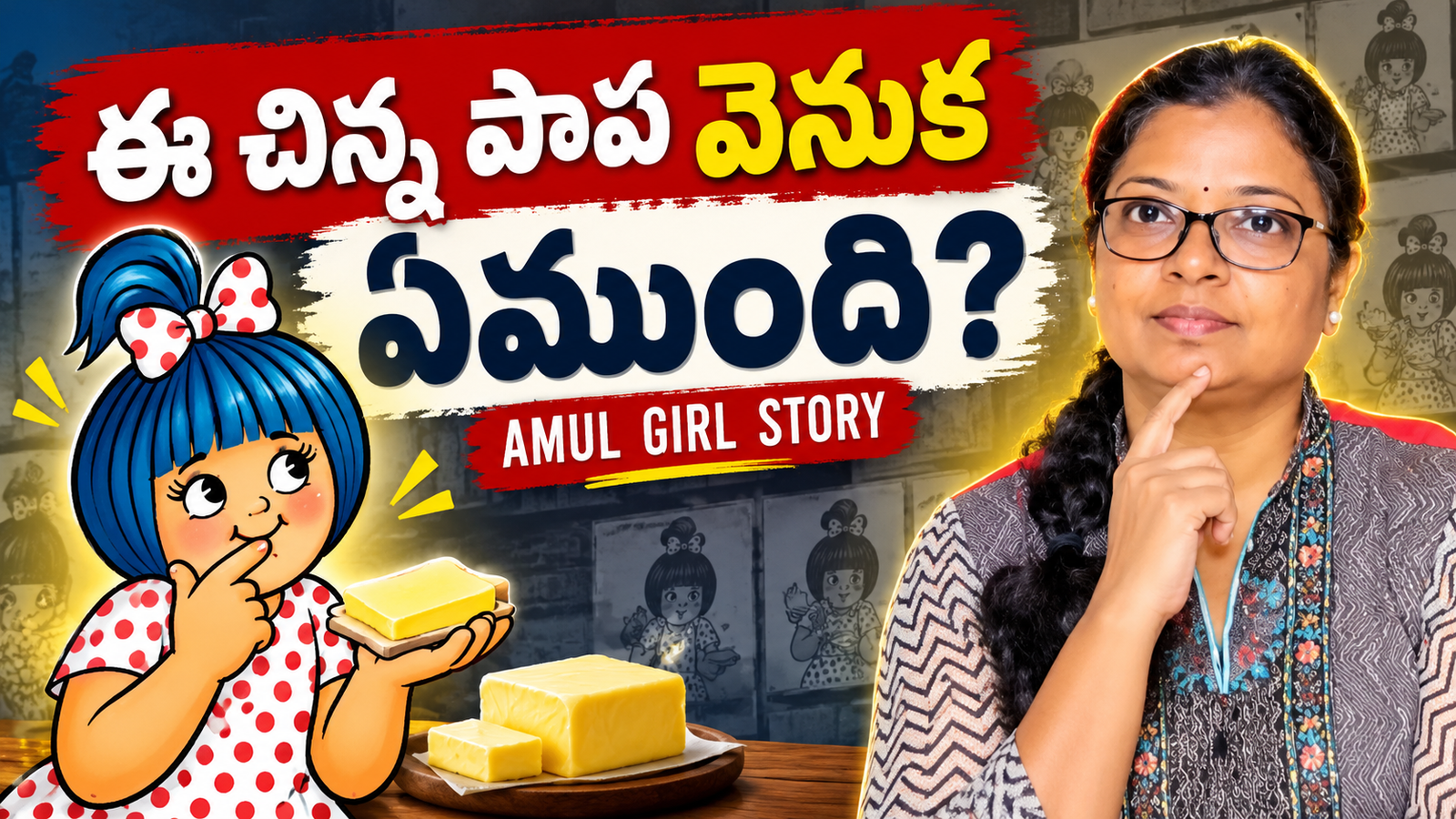
Amul Girl: The Little Cartoon That Became a Big Branding Success Story
Have you ever wondered why a little cartoon girl on a butter packet is still remembered by generations of Indians?

Think about it. We see hundreds of advertisements every day. Brands introduce new celebrities, change their logos, launch new campaigns and try different ways to attract customers.
But there is one little girl who has been part of India’s advertising story for decades. She has blue hair, a red polka-dot dress and a mischievous smile.
Yes, I am talking about the famous Amul Girl!
But how did this little cartoon character become such an important part of one of India’s most recognised brands? Was it just a cute design, or was there a clever branding idea behind it?
Let’s find out!
How did the Amul Girl story begin?
The story takes us back to 1966.
At that time, Amul wanted to make its butter brand more recognisable through advertising. But there was already competition in the market. Polson, another butter brand, had an established presence and used a girl character in its advertisements.
Amul needed a distinctive identity of its own.
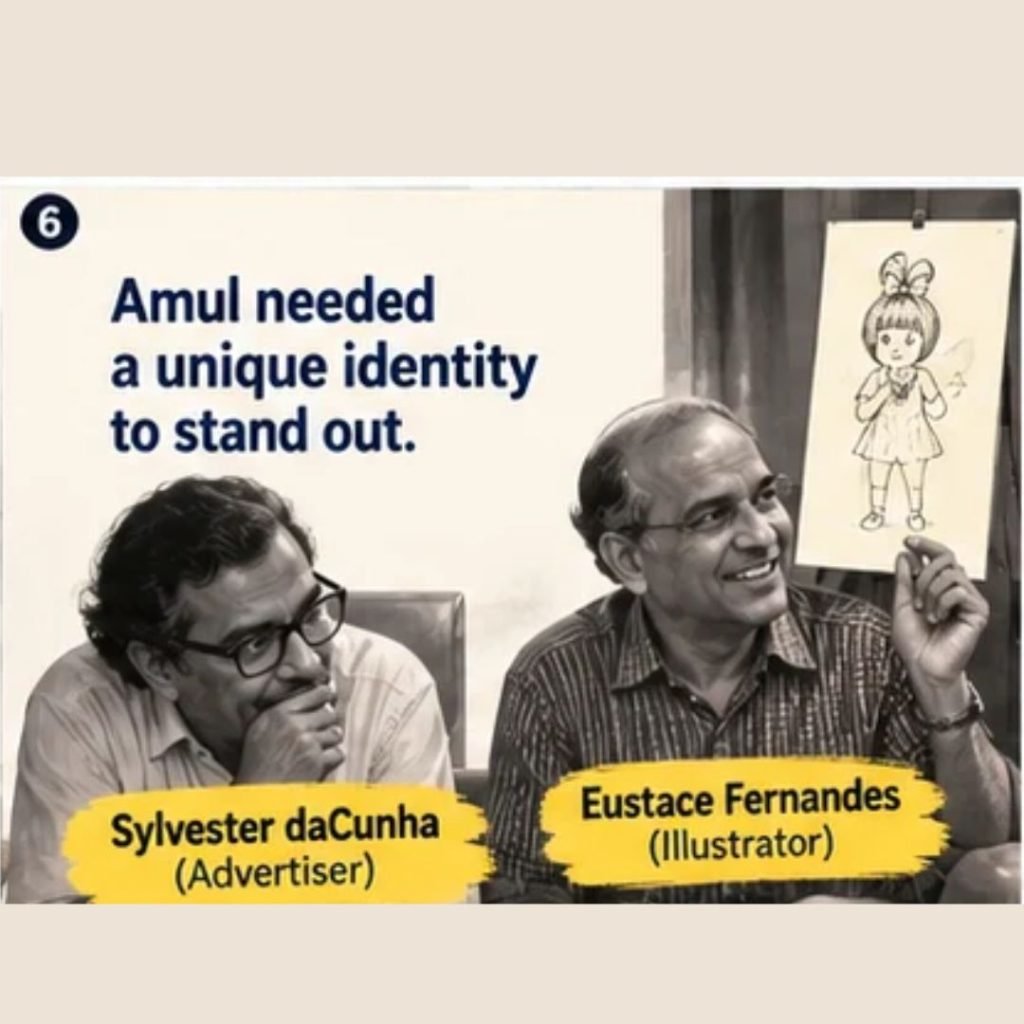
Instead of simply showing butter in advertisements and talking about its taste, the brand took a creative approach. The idea was to introduce a character that people could recognise and remember.
This is where the Amul Girl entered the picture.
Sylvester daCunha, who worked on Amul’s advertising, and illustrator Eustace Fernandes played important roles in bringing the character to life.
The result was a little girl with blue hair, big eyes, a mischievous expression and a red polka-dot dress.
A simple character. A distinctive appearance. And an idea that would become part of India’s advertising history.
But creating a character was only the beginning. The real challenge was making people remember her.
Why a little girl? Why that particular design?
Have you ever noticed how easily you can recognise the Amul Girl, even when you see her in a small advertisement?
That is one of the interesting aspects of her design.

The character has a few distinctive visual elements. Her blue hair, red polka-dot dress and playful expression make her easy to identify.
During the 1960s, advertisements on outdoor billboards often involved hand-painted artwork. A character that could be reproduced repeatedly without losing its identity was useful for advertising.
Imagine if Amul had introduced a completely different character in every campaign. One advertisement might have featured a cartoon girl, another a cartoon boy and another a different mascot altogether.
Would people have connected all those advertisements with the same brand as easily?
Probably not.
The consistency of the Amul Girl’s appearance helped build familiarity over time.
Of course, her design alone was not the entire reason for her success. What made the character particularly interesting was how Amul used her in its advertising.
And that brings us to the real twist in this story!
The big twist: Amul stopped talking only about butter
Think about it. How many different ways can a brand talk about butter?
You can talk about its taste, quality, freshness and the food people prepare with it. These are all important, but repeating the same message in every advertisement can become predictable.
Amul took a different approach.
Instead of making every advertisement only about its product, the brand began using the Amul Girl to comment on current events.
Politics, cricket, films, popular personalities and events people were discussing became subjects for its witty advertisements.
Suddenly, the little girl was doing much more than appearing on a butter packet.
She was reacting to what was happening around her!
People could see an event in the news and then encounter an Amul advertisement that made a humorous reference to it. The clever wordplay and topical humour often gave people another reason to stop and look at the advertisement.
Think about the difference.
In a regular product advertisement, the brand tells you why you should buy something.
In a topical advertisement, the brand connects itself with something you are already interested in.
That is a very different way of getting attention.
Amul’s famous advertising style, including its long-running association with the Amul Girl, helped make the brand a familiar presence in India’s public conversations.
A small wordplay that showed a big creative idea
One interesting example associated with Amul’s early advertising was the wordplay “Thoroughbread!”
The advertisement showed a child riding a horse and holding a piece of buttered bread.
The word combines the idea of a thoroughbred, a type of horse, with bread, which people eat with butter.
It is a simple pun, but that is exactly what makes it memorable.
The advertisement connected the subject of horse racing with an everyday food product through a clever play on words.
This illustrates something important about creative advertising: sometimes, a small idea can communicate more effectively than a long explanation.
You do not always need a complicated advertisement to make people notice your brand. A relevant idea, presented in an unexpected way, can be enough to make someone pause and smile.
Why has the Amul Girl remained memorable for so long?
Here is the part I find most interesting.
The world of advertising has changed enormously since 1966. Television, the internet, social media, short videos and digital advertising have transformed the way brands communicate.
Yet the Amul Girl remains recognisable.
Why?
1. Consistency creates familiarity
Amul did not need to reinvent its mascot for every campaign. The familiar character continued to appear in different situations while retaining her distinctive look.
Over time, that consistency helped people connect the character with the brand.
2. The brand stayed connected to current events
Although the character remained recognisable, the situations and subjects changed.
This allowed the advertisements to feel relevant to what people were discussing at the time.
The combination of a familiar character and changing topics helped the brand maintain its distinctive advertising style.
3. Humour made the advertisements more engaging
People do not always want to be told to buy a product. Sometimes they simply enjoy a clever joke.
Amul’s topical advertisements used humour and wordplay to connect with current events, giving audiences something to notice and remember.
4. The character became bigger than a single advertisement
A successful advertisement may attract attention for a few days. A memorable character can become associated with a brand for years.
The Amul Girl became more than a visual element in an advertisement. She became one of the brand’s most recognisable symbols.
That is the power of building a consistent brand identity over time.
What can businesses learn from the Amul Girl?
You do not need to be a large company to learn something from this story.
Even if you run a small business, a boutique, a restaurant, a clinic or a personal brand, the same principles can help you communicate more effectively.
First, give people something distinctive to remember.
It could be your logo, a particular colour combination, a recurring character, a signature phrase or a recognisable content style.
Second, consistency matters.
You do not need to change your entire visual identity every few months just because a new design trend appears. Give people time to become familiar with your brand.
Third, talk about what your audience cares about.
Your content does not always have to be about your products or services. You can discuss relevant events, answer common questions, share useful observations or use humour when appropriate.
Finally, think beyond individual advertisements.
Instead of asking, “How can I make this one post attractive?”, ask yourself, “How can I create a style that people will recognise even before they see my brand name?”
That is a more useful long-term question.
The biggest branding lesson from the Amul Girl
Here is what makes this story so fascinating.
The Amul Girl is a cartoon character. Her design is simple, and her appearance has remained recognisable for decades.
But her lasting importance comes from more than her red polka-dot dress or blue hair. It comes from the way Amul used the character consistently, connected her with current events and built a distinctive advertising identity around her.
A memorable brand is not built by changing everything all the time. Sometimes, it is built by keeping one distinctive thing consistent while finding new ways to make it relevant.
And that is the lesson I take away from the Amul Girl story.

You may have a small business today. You may have just started your Instagram page. You may be trying to make your brand stand out in a crowded market.
You do not necessarily need a huge advertising budget or a different idea every day.
Start by identifying what makes your brand distinctive. Then communicate it consistently and connect with the people you want to reach.
Because people noticing your brand is one achievement.
People recognising your brand without even reading its name? That is the real power of branding!
Over to you!
Have you ever seen an Amul Girl advertisement that made you laugh or surprised you with its clever wordplay?
Share your favourite memory in the comments!
And if you enjoy discovering the fascinating stories behind famous brands, follow my series “ఈ బ్రాండ్ కథ విన్నారా?” for more stories about the ideas, campaigns and turning points that shaped the brands we know today.
Do the following task for branding details