The Real Story Behind Its Success
How a small DVD rental company changed the way the world watches movies, made some big mistakes, and became one of the most recognised entertainment brands.
Imagine you want to watch a movie. You go to a rental shop, take a DVD home, watch it, and forget to return it on time. A few days later, you get a late fee!
Sounds familiar? This was quite normal before online streaming became popular.
But what if someone told you that this small problem could inspire a business idea that would change the entertainment industry forever?
That is one of the most interesting parts of the Netflix story.
Today, Netflix is a household name. People watch movies, web series and documentaries whenever they want, on their phones, laptops and TVs. But Netflix did not start as a streaming platform. Its journey had financial struggles, a missed business opportunity, a major customer backlash and some very smart decisions.
Let’s go back in time and see how it all happened.
1. How did Netflix start?
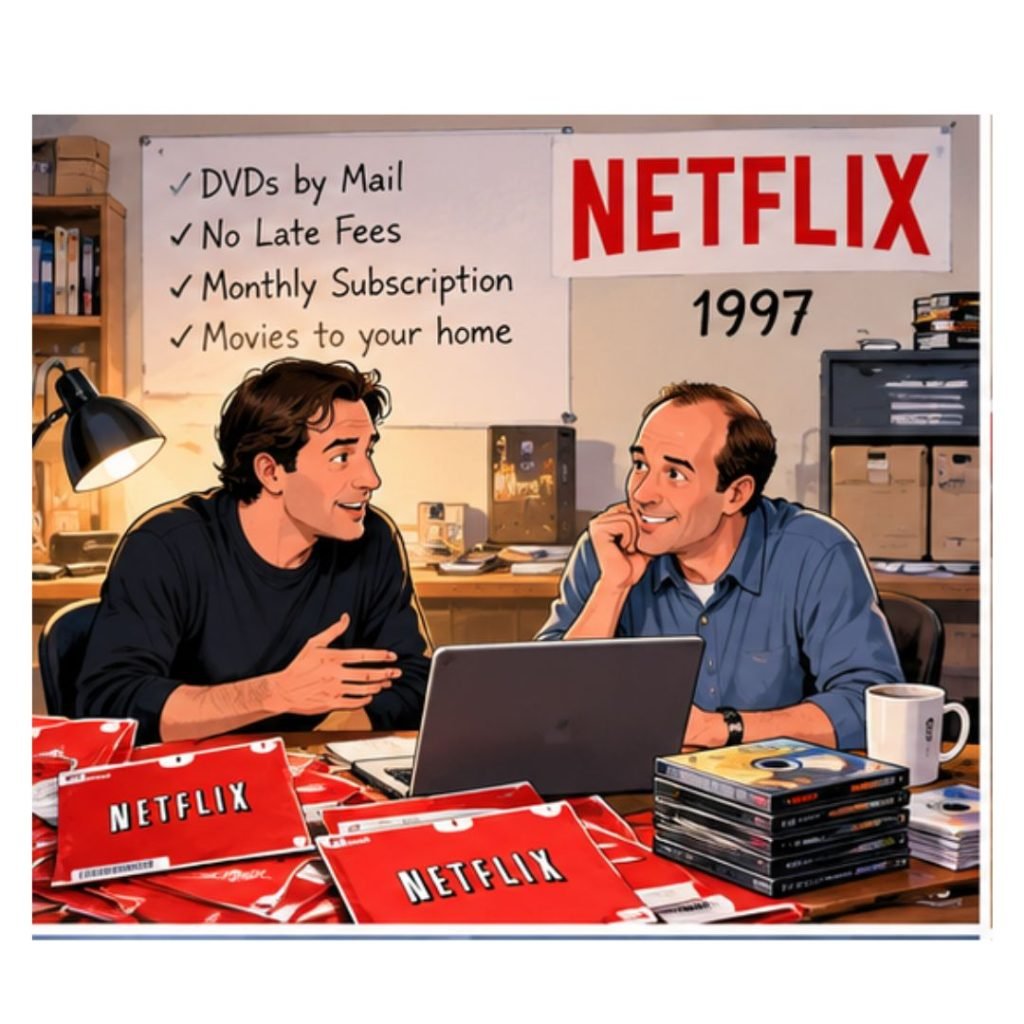
Netflix was founded on August 29, 1997, by Reed Hastings and Marc Randolph in Scotts Valley, California, USA.
There is a popular story about how Reed Hastings got the idea for Netflix. He reportedly had to pay a $40 late fee after returning a rented copy of the movie Apollo 13 late. This experience is often cited as the inspiration for a movie rental service without late fees.
Think about it. Sometimes, an idea comes from a simple problem that irritates us.
Instead of thinking, “Why should I pay this extra amount?”, what if we think, “Can I create a better service so that people don’t face this problem?”
That is the kind of thinking that can lead to a business opportunity.
Netflix started by offering DVDs through an online rental service. Customers could select movies on its website, receive DVDs by mail, watch them at home and return them.
In 1999, Netflix introduced a monthly subscription model that allowed customers to rent DVDs without the usual late fees.
For customers, this was a convenient option. They didn’t have to visit a rental shop every time they wanted to watch a movie.
Netflix was solving a real customer problem. And that is an important starting point for any business.
2. The biggest twist: Blockbuster rejected Netflix!
Now comes one of the most interesting turning points in this story.
During its early years, Netflix was not a huge success. The company was facing financial challenges, and it needed a way to grow its business.
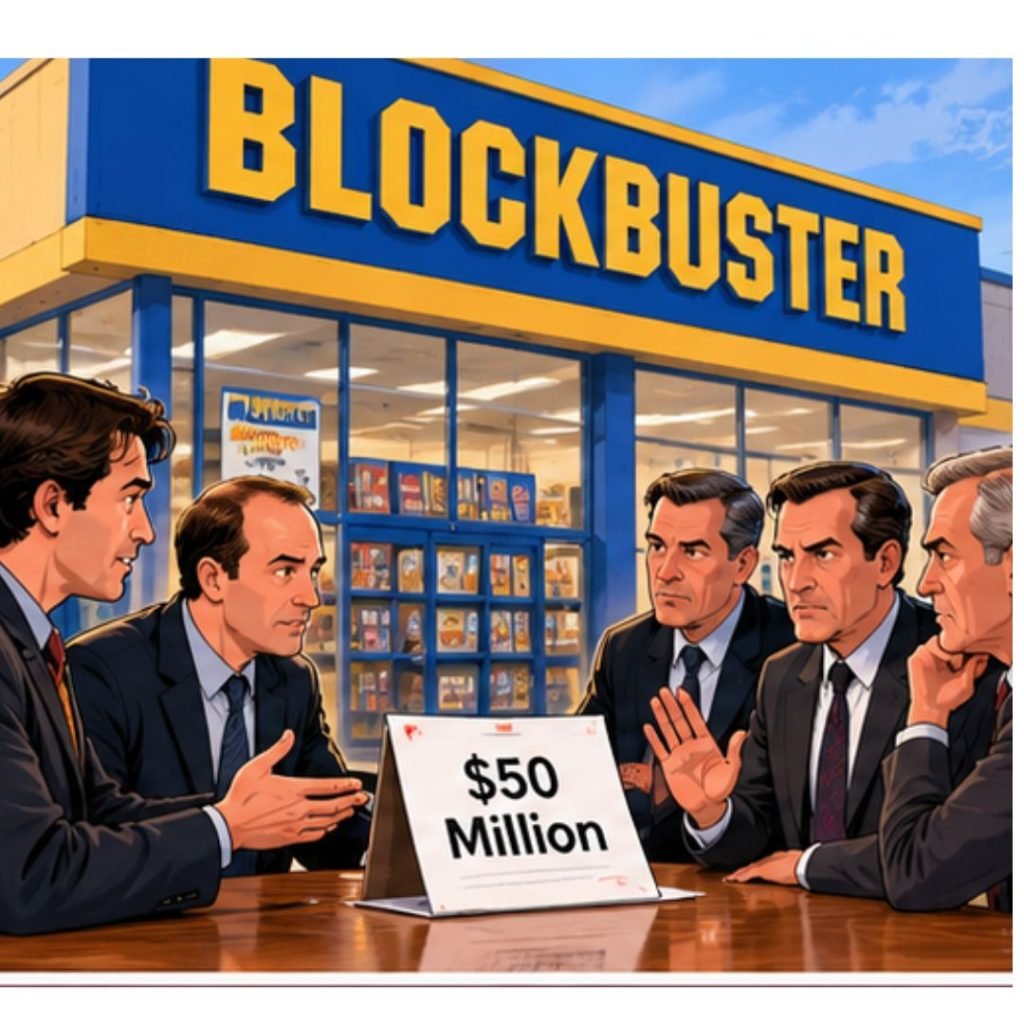
In 2000, Netflix approached Blockbuster, one of the biggest video rental companies at the time, with a proposal reportedly valued at $50 million.
The idea was to work with Blockbuster and help it build its online business.
But the proposal was not accepted.
At that time, Blockbuster had a strong presence with its physical rental stores. People were already walking into these stores to rent movies. From its point of view, the traditional business was still important.
But the way people consumed entertainment was about to change.
Netflix continued working on its business, while Blockbuster later struggled to adapt to the changing market. In 2010, Blockbuster filed for bankruptcy protection.
Netflix, meanwhile, moved towards digital streaming and grew into a global entertainment company.
Just imagine! A company that had the opportunity to work with Netflix turned it down, and the smaller company went on to change the industry.
Of course, we cannot say that this one decision alone caused Blockbuster’s downfall. The market was changing, and Blockbuster faced several business challenges. But this episode is a powerful example of what can happen when a company fails to respond to change.
Marketing lesson: Never assume that your current business model will work forever. Keep watching customer behaviour, technology and market trends.
3. From DVDs to streaming: Netflix changes its direction
Netflix understood that the internet could change the way people watched movies.
Instead of depending only on DVDs, the company started moving towards digital distribution.
In January 2007, Netflix launched its streaming service, allowing customers to watch selected content online.
Initially, the service had a limited catalogue compared with what we see today. But Netflix kept expanding its reach, including through partnerships that brought streaming to more devices.
This was a major change in the company’s business model.
Earlier, Netflix had to send a physical DVD to a customer’s home. Now, customers could watch content through the internet.
Think about the difference. No waiting for a delivery, no returning a DVD, and no need to visit a rental shop.
This is what happens when a business understands that customer convenience matters.
Netflix did not become a streaming giant overnight. It had to invest in technology, build partnerships, expand its content library and keep improving the experience.
Marketing lesson: Don’t get too attached to the way you started your business. If customer habits are changing, your business should be ready to change too.
4. Netflix made a big mistake too!
So far, Netflix looks like a company that made smart decisions. But even successful companies make mistakes.
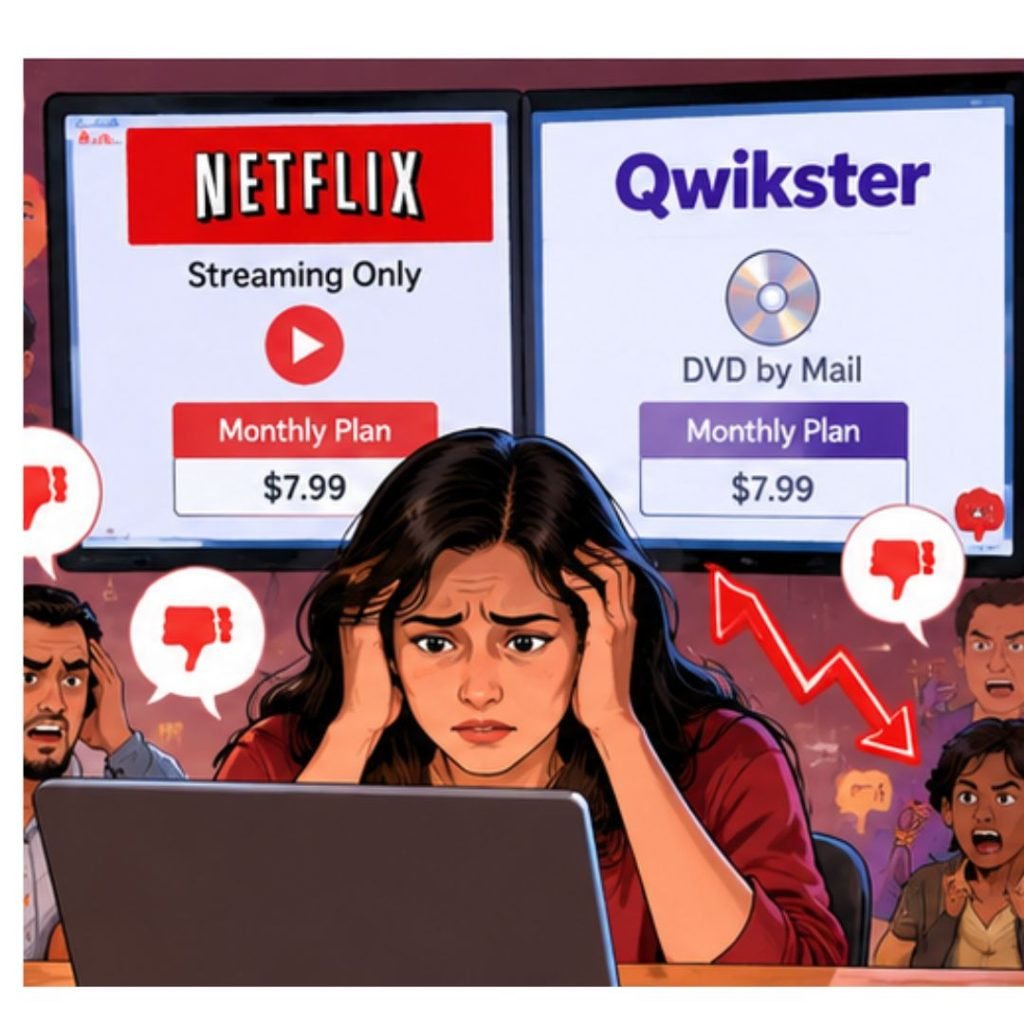
In 2011, Netflix announced changes to its DVD rental and streaming services. It planned to separate the DVD business under a new name called Qwikster.
The decision did not go down well with customers.
The pricing changes made the services more expensive for many customers, and the proposed separation created confusion. People who were used to a simpler experience were unhappy with the new arrangement.
The result? Netflix lost around 800,000 subscribers in the United States during that period.
The company faced strong criticism. Its stock price also came under pressure.
Reed Hastings publicly apologised, and Netflix eventually cancelled the plan to move the DVD business to Qwikster.
This is a very important part of the Netflix story because it shows that even a company with a great idea can make a wrong decision.
The company may think a change is good for the business, but customers may see it differently.
If customers feel that your service is becoming complicated or expensive without enough value in return, they may leave.
Imagine you are running a business and suddenly change your prices, service process or subscription plans without properly understanding how your customers will react. You may lose the very people who helped you grow.
Marketing lesson: Before making a major change, listen to your customers. A business decision should not be based only on what is convenient for the company. It should also make sense to the people paying for the service.
5. House of Cards: Netflix starts creating its own content
Netflix was no longer satisfied with only distributing movies and TV shows created by others.
It wanted to create original content.
In 2013, Netflix released House of Cards, one of its major early original series. Instead of following the traditional weekly release pattern, Netflix made the first season available all at once.
This helped popularise the binge-watching habit, where people watch multiple episodes in one sitting.
Why was this important?
Netflix was no longer just a platform where people watched content. It was also becoming a company that created content.
This gave the brand a stronger identity and helped it stand out in a competitive market.
The company also used viewing data to understand what people watched, which shows they completed and what kinds of content interested different audiences.
Data became an important part of its decision-making.
Marketing lesson: Understand what your audience likes. Don’t simply guess what they want. Use customer feedback and available data to make better decisions.
6. How does Netflix know what you want to watch?
Have you ever opened Netflix and noticed that it recommends a movie or series that you actually feel like watching?
You may have watched a crime thriller yesterday, and today Netflix suggests another thriller. Or you may enjoy a particular actor, and the platform shows you more content that matches your interests.
This is where its recommendation system comes in.
Netflix uses algorithms and viewing-related data to personalise recommendations. The system considers different signals to help decide what content may be relevant to each member.
The goal is simple: help people find something they want to watch without spending too much time searching.
Netflix has previously published research estimating that its recommendation system created more than $1 billion a year in value, largely through customer retention. This is a historical estimate from Netflix’s own research, not a verified figure for its current annual savings.
Why does this matter?
Imagine opening a streaming platform every day and struggling to find anything interesting. After some time, you may feel that the subscription is not worth paying for.
But if the platform regularly recommends content you enjoy, you have a reason to keep coming back.
This is an example of how personalisation can support customer satisfaction and retention.
The same principle can be used in digital marketing.
An online store can recommend products based on customer interests. An email marketer can send relevant offers to different customer groups. A content creator can study which topics attract the audience and create more useful content.
The point is not to show everyone the same thing. The point is to understand what is relevant to each person.
Marketing lesson: Getting a customer is only one part of the job. Giving them a reason to stay is equally important.
7. What can small businesses learn from Netflix?
You may be thinking, “Netflix is a huge international company. How can a small business learn from it?”
Actually, there are several lessons we can apply even to a small business in Hyderabad.
Lesson 1: Solve a real problem
Netflix started with a customer inconvenience. Before launching a product or service, understand what problem your customers are facing.
Lesson 2: Be ready to change
Netflix moved from DVDs to streaming. Your business may also need to adopt new technology, improve its website, change its marketing approach or offer a better customer experience.
Lesson 3: Listen to customers
The Qwikster episode shows how quickly customers can react when a change makes their experience worse. Ask for feedback before making major decisions.
Lesson 4: Use data to make better decisions
You don’t need complicated AI tools to get started. Even basic website analytics, social media insights, customer enquiries and sales data can help you understand what is working.
Lesson 5: Focus on existing customers too
Many businesses spend most of their time trying to find new customers. But retaining existing customers is also important.
A satisfied customer may return, recommend your business to others and become a long-term source of revenue.
Lesson 6: Learn from mistakes
No business gets every decision right. What matters is how quickly you recognise a problem, learn from it and take corrective action.
Final thoughts: The real Netflix success story
The Netflix story is not just about movies, DVDs or streaming technology.
It is about identifying a problem, trying a new approach, adapting to change and learning from mistakes.
Blockbuster’s missed opportunity became a famous business lesson. Netflix’s Qwikster mistake showed that even successful brands can lose customers when they make changes without considering the customer experience.
And Netflix’s move into streaming and original content showed the importance of looking ahead instead of depending only on past success.
For me, the biggest lesson is this:
Don’t become so comfortable with today’s success that you stop preparing for tomorrow’s changes.
This applies to big companies, small businesses, freelancers, digital marketers and even content creators.
The market will keep changing. Customer expectations will keep changing. Technology will keep changing.
The question is: Are we ready to change along with it?
What do you think? If Blockbuster had accepted Netflix’s offer in 2000, would the entertainment industry look different today?
Share your thoughts in the comments!
Want to know how a little cartoon girl made Amul one of India’s most memorable brands? Read my story on the Amul Girl: The Little Cartoon That Became a Big Branding Success Story and discover the marketing magic behind her success!
About the author
Jyothirmayee Jandyam is a digital marketing trainer, mentor and content creator who shares practical insights about digital marketing, branding, AI tools and business growth.
Follow OnlineMarketz for more stories and lessons that help you understand marketing in a simple, practical way.