

If your skin starts acting up the moment the first rains arrive, you’re not alone. The rainy season throws a mix of humidity, moisture, and sudden temperature changes at your skin — and it doesn’t always handle that well.
This guide is for anyone who deals with oily skin flare-ups, breakouts, fungal issues, or just that dull, sticky feeling that comes with monsoon weather. Whether you’re a skincare beginner or someone with an existing routine that suddenly stops working in the rains, this is for you.
Monsoon skin care tips routine
Monsoon skin issues
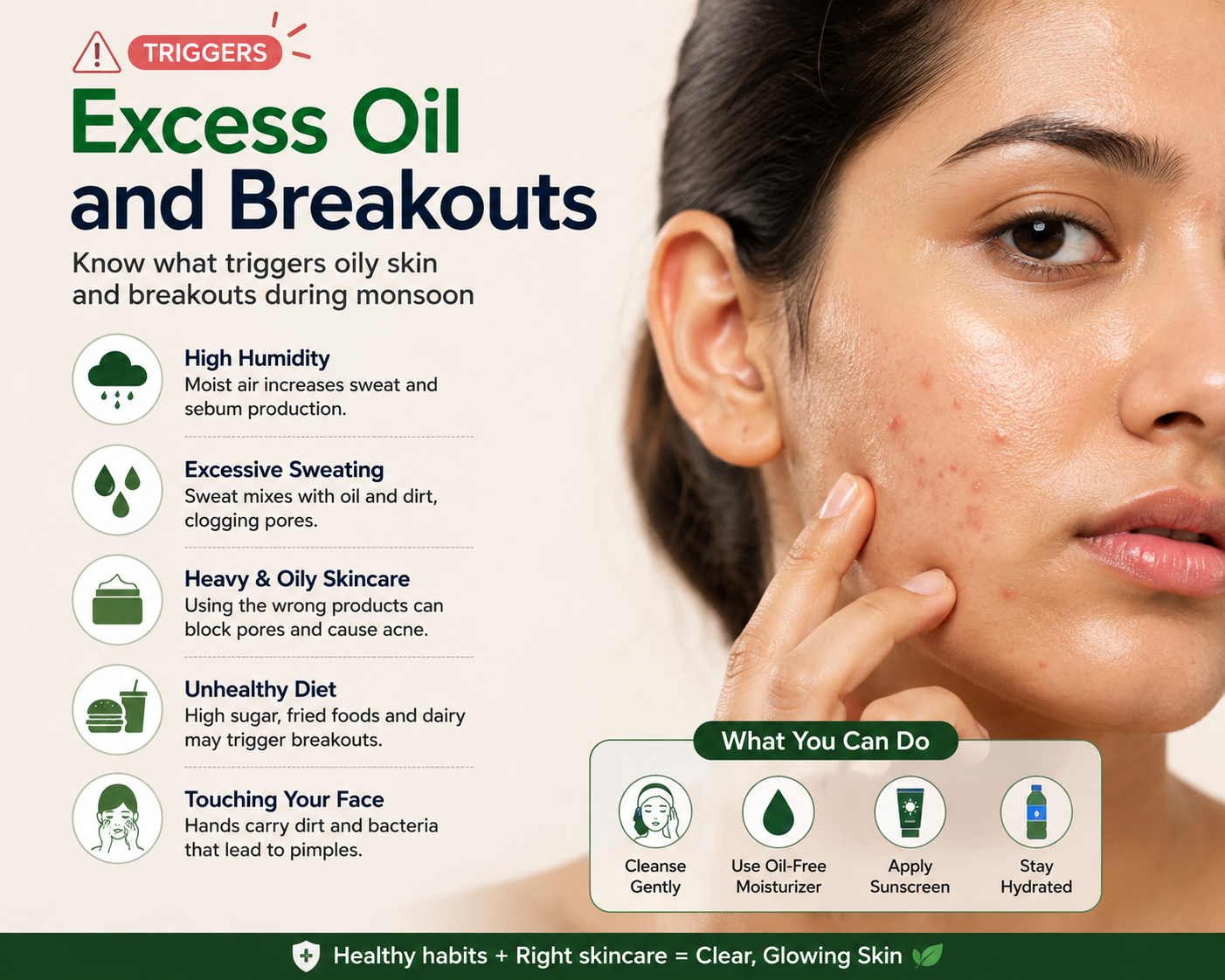
High humidity during monsoon signals your skin’s sebaceous glands to go into overdrive. When moisture levels in the air spike, your skin struggles to regulate itself, pumping out extra oil to compensate. This excess sebum mixes with sweat, dirt, and dead skin cells — clogging pores and setting the stage for painful breakouts, whiteheads, and blackheads.
Why Moisture Imbalance Leads to Dull Skin
Rainy season creates a tricky paradox — the air feels humid, so you skip moisturizer, but your skin’s actual hydration levels drop. Sweat and rain wash away your skin’s natural protective barrier repeatedly throughout the day, leaving skin dehydrated beneath the surface. The result? A tired, lackluster complexion that no amount of face washing seems to fix.
Common Skin Problems That Worsen in Monsoon
| Skin Issue | Main Trigger |
|---|---|
| Acne & pimples | Clogged pores from excess sebum |
| Fungal infections | Warm, damp environment |
| Eczema flare-ups | Humidity disrupting skin barrier |
| Hyperpigmentation | UV exposure through cloudy skies |
| Oily T-zone | Overactive sebaceous glands |
Build the Right Rainy Season Skincare Routine
A. Choose a Gentle Cleanser to Remove Dirt and Humidity Buildup
High humidity causes sweat, oil, and pollutants to clog pores fast. Switch to a gentle foaming or gel-based cleanser that deep cleans without stripping your skin’s natural barrier. Cleanse twice daily — morning and night — to keep breakouts in check.
B. Use a Lightweight Moisturizer to Keep Skin Balanced
Skipping moisturizer in monsoon is a common mistake. Humid air doesn’t hydrate your skin — it actually disrupts your moisture barrier. Opt for a water-based or gel moisturizer with hyaluronic acid. It hydrates without feeling heavy or greasy.
C. Never Skip Sunscreen Even on Cloudy Days
UV rays cut right through cloud cover. A broad-spectrum SPF 30 or higher is non-negotiable year-round. In rainy season, pick a mattifying or water-resistant formula so it holds up through humidity and light drizzle.
D. Add a Toner to Tighten Pores and Refresh Skin
A good toner works hard during monsoon — it removes leftover residue after cleansing and keeps pores from getting clogged.
Best toner ingredients for rainy season:
- Niacinamide – controls oil and minimizes pores
- Witch hazel – tightens and refreshes
- Rose water – soothes and balances pH
Best Ingredients to Look for in Rainy Season Products
Salicylic Acid to Control Breakouts and Oiliness
Humidity spikes during monsoon trigger excess sebum, clogging pores fast. Salicylic acid (BHA) cuts through that oil, dissolves dead skin buildup inside pores, and calms active breakouts before they spread. Look for concentrations between 1–2% in cleansers or toners for daily use without over-stripping.
Hyaluronic Acid to Maintain Healthy Hydration
Rainy weather feels humid, but indoor air conditioning quietly dehydrates your skin. Hyaluronic acid pulls moisture into skin cells and holds it there. It works on all skin types without adding grease — perfect for monsoon.
- Choose serums with multiple molecular weights for deeper absorption
- Apply on slightly damp skin for best results
- Layer under a lightweight, non-comedogenic moisturizer
Niacinamide to Brighten and Protect the Skin Barrier
Niacinamide is a monsoon multitasker. It:
| Benefit | How It Helps |
|---|---|
| Controls oil | Reduces sebum production |
| Brightens skin | Fades dullness and dark spots |
| Strengthens barrier | Protects against humidity-triggered irritation |
| Fights bacteria | Reduces inflammation and breakout frequency |
A 5–10% concentration works well for most skin types without causing sensitivity. Pair it with salicylic acid on alternate days for balanced results.
Rainy season skin care
Skin hygiene during monsoon
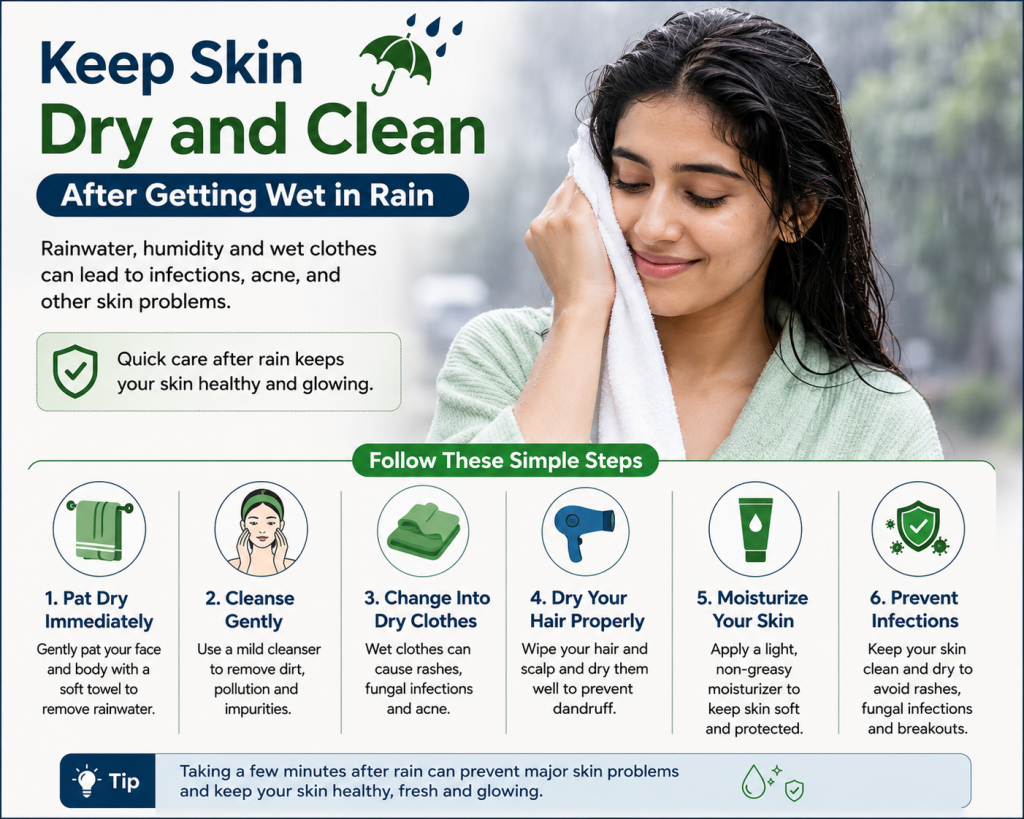
Pat your skin completely dry after rain exposure — especially skin folds like underarms, behind knees, and between toes. Leftover moisture is a breeding ground for fungal growth.
Use Antifungal Powder in Moisture-Prone Areas
Dust antifungal powder (clotrimazole or miconazole-based) on areas that stay sweaty or damp. This works well for:
- Inner thighs
- Underarms
- Under the chest
- Between toes
Avoid Touching Your Face with Unwashed Hands
Rain splashes carry dirt, pollutants, and bacteria. Your hands pick all of that up. Touching your face transfers it directly to your pores — leading to breakouts and infections fast.
Change Damp Clothes Immediately to Prevent Skin Irritation
Wet fabric sitting against your skin creates a warm, moist environment that fungi absolutely love. Change out of damp clothes as quickly as possible and choose breathable, moisture-wicking fabrics on rainy days.
Spot Treat Early Signs of Infection Before They Spread
Catch problems early. Watch for:
| Sign | What It May Indicate |
|---|---|
| Red, itchy ring-shaped rash | Ringworm (fungal) |
| Painful bumps or pus | Bacterial infection |
| Persistent flaking patches | Fungal overgrowth |
Apply over-the-counter antifungal cream at the first sign and consult a dermatologist if it spreads.
Natural Home Remedies for Glowing Skin in Monsoon
Apply Turmeric and Honey Mask to Fight Bacteria

Mix one teaspoon of turmeric with two teaspoons of raw honey and apply it to clean skin for 15 minutes. Turmeric’s curcumin actively fights bacteria and calms inflammation, while honey locks in moisture and keeps breakouts at bay. Rinse with lukewarm water twice a week for noticeably clearer skin.
Use Aloe Vera Gel to Soothe and Hydrate Irritated Skin
Fresh aloe vera gel straight from the leaf works brilliantly during monsoon. It cools redness, reduces humidity-triggered breakouts, and gives skin a light layer of hydration without feeling heavy or greasy. Apply a thin layer after cleansing and leave it on as a lightweight moisturizer — your skin will thank you.
Try Rice Water Toner for Brighter and Smoother Skin
Rice water is loaded with vitamins B and E, which brighten dull skin and tighten pores — both common monsoon concerns.
How to make it:
- Soak ½ cup of raw rice in 2 cups of water for 30 minutes
- Strain the liquid into a clean bottle
- Apply with a cotton pad after cleansing
Use it daily for smoother, more even-toned skin within a few weeks.
Diet and Lifestyle Habits That Boost Skin Health in Rain
Stay Hydrated to Flush Out Toxins and Maintain Glow
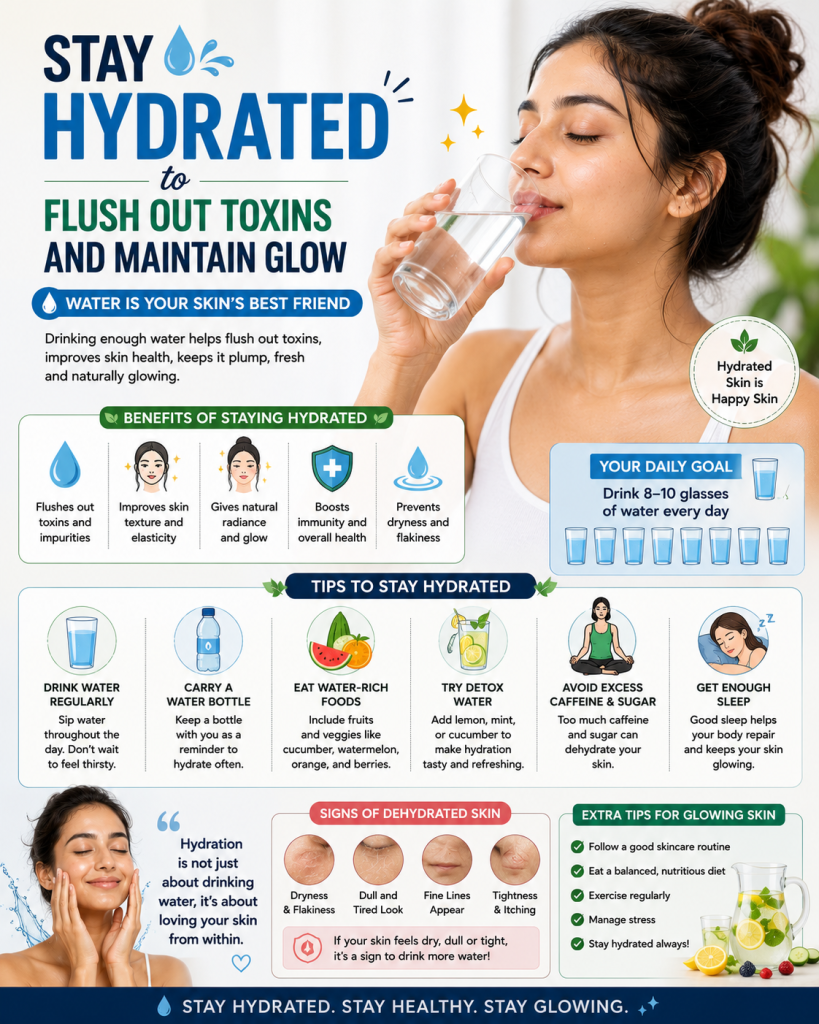
The cool weather tricks you into drinking less water, but your skin still needs it. Aim for 8–10 glasses daily. Herbal teas, coconut water, and warm lemon water are great alternatives that keep you hydrated while supporting detox.
Eat Antioxidant-Rich Foods to Strengthen Skin Defense
Your plate directly shapes your skin’s ability to fight off monsoon damage. Load up on:
- Berries, tomatoes, and carrots – rich in vitamins C and A
- Nuts and seeds – packed with vitamin E to repair the skin barrier
- Green leafy vegetables – support collagen and fight inflammation
- Turmeric and ginger – natural anti-inflammatory powerhouses
Avoid fried, oily foods during monsoon — they spike sebum production and worsen breakouts.
Get Enough Sleep to Allow Skin Repair Overnight
Skin renewal happens mostly between 10 PM and 2 AM. Missing sleep means missing your skin’s natural repair window. Target 7–8 hours of quality sleep consistently.
Manage Stress to Prevent Hormonal Breakouts
High stress raises cortisol levels, which triggers excess oil production and breakouts. Simple daily habits help:
- 10 minutes of deep breathing or meditation
- Regular light exercise like yoga or walking
- Limiting screen time before bed
Conclusion
The rainy season can be a tricky time for your skin, but once you understand what’s happening — the extra humidity, the fungal risks, the oiliness — it gets a lot easier to handle. A solid routine with the right ingredients, a few smart lifestyle habits, and some simple home remedies can make a huge difference in keeping your skin healthy and glowing through the monsoon months.
Start small if you need to. Swap out your heavy moisturizer, add an antifungal powder to your routine, drink more water, and eat cleaner. These little changes add up fast. Your skin works hard to protect you all year round — the rainy season is just a good reminder to return the favor.