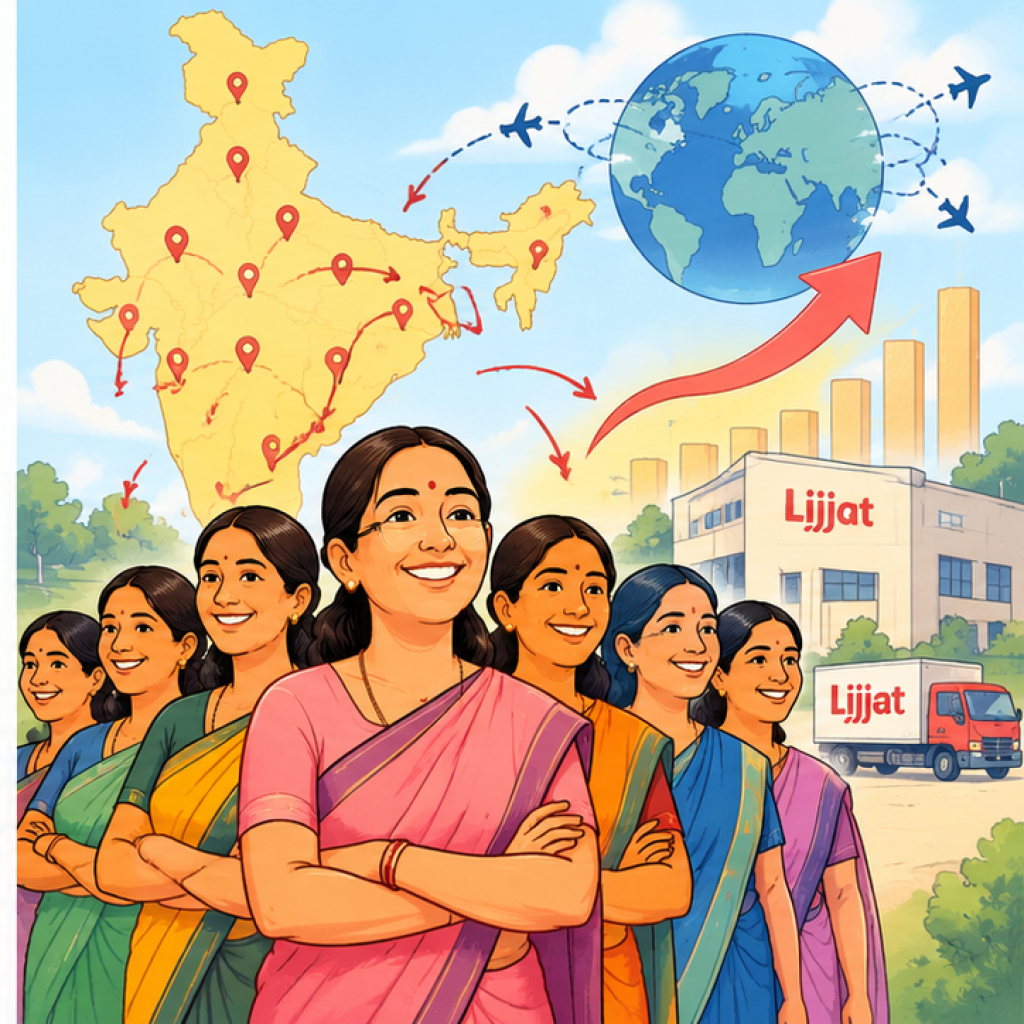
Lijjat Papad Success Story: How 7 Women Turned ₹80 into a Business Legend
Can you imagine starting a business with just ₹80 and turning it into a brand recognised across India and beyond?
Sounds unbelievable, kada? But this is the inspiring story of Lijjat Papad.
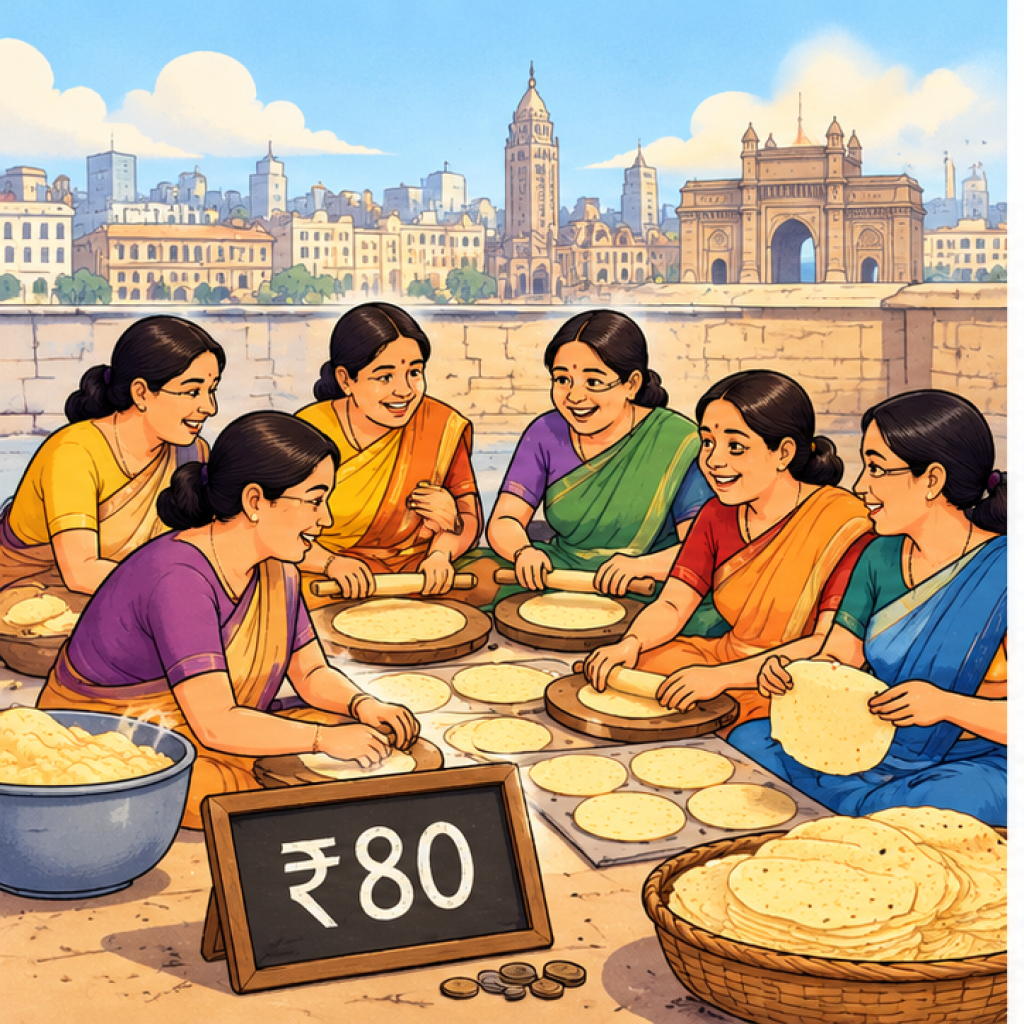
In 1959, seven ordinary women in Mumbai started a small papad-making business. They didn’t have big offices, huge investments, professional marketing teams, or fancy business degrees. What they had was a skill, a strong desire to earn on their own, and the confidence to try something different.
Today, Lijjat Papad is remembered not just as a popular Indian food brand but also as an example of women’s empowerment and collective entrepreneurship.
For anyone interested in business, branding, or digital marketing, this story has some really useful lessons. Let’s understand how a small homemade product became a big name.
1. How Did Lijjat Papad Start?
The story began on March 15, 1959, in Girgaum, Mumbai.
Seven Gujarati homemakers came together with a simple idea: make papads and earn an independent income through their own work.
The women received initial financial support of ₹80 from social worker Chhaganlal Karamsi Parekh, popularly known as Chaganbapa. They started making papads on a small scale and selling them locally.
Their beginning was very simple. No fancy packaging, no celebrity endorsements, no social media promotions, and no big advertising campaigns.
They focused on making a product that people would like and buy again.
That’s where their journey started.
The first lesson for aspiring entrepreneurs: You don’t need to wait until everything is perfect. Start with what you know, use what you have, and improve as you grow.
2. Seven Women, One Common Goal
The seven founding members were:
- Jaswantiben Jamnadas Popat
- Parvatiben Ramdas Thodani
- Ujamben Narandas Kundalia
- Banuben N. Tanna
- Laguben Amritlal Gokani
- Jayaben V. Vithalani
- Diwaliben Lukka
They wanted to earn an income while working around their household responsibilities.
Instead of building a business where only one person benefited, they developed a cooperative model in which the women who worked in the organisation could become members and share ownership.
This was a powerful idea. The women were not simply making papads for someone else’s business. They were building something they could call their own.
Over time, the organisation grew and created livelihood opportunities for thousands of women.
In November 2021, co-founder Jaswantiben Popat received the Padma Shri for her contribution to trade and industry.
Think about it. A woman who helped start a small papad-making venture became part of the story of one of India’s most recognised homegrown brands.
Sometimes, a small beginning can lead to something much bigger than we imagine.
3. How Did Lijjat Build Its Brand Without Digital Marketing?
Today, when we talk about marketing, we immediately think of Instagram Reels, Google Ads, SEO, influencer marketing, and YouTube videos.
But Lijjat began long before these platforms existed.
So, how did it reach customers?
Word-of-mouth marketing
In the early days, the women sold their papads locally. When customers liked the product, they recommended it to others.
One household told another. More customers started buying, and demand gradually increased.
This is word-of-mouth marketing.
Even today, it is one of the most valuable forms of marketing. A satisfied customer recommending your product to a friend can be more powerful than a paid advertisement.
For digital marketers, the lesson is simple: don’t focus only on getting new customers. Give existing customers a reason to recommend you.
A memorable brand name
The organisation adopted the name Lijjat, a Gujarati word associated with deliciousness or taste.
A good brand name should be easy to remember and connect with what the business offers.
When you create a brand for a client, don’t select a name just because it sounds stylish. Think about whether people can remember it, pronounce it, and associate it with the product.
Consistent product quality
Imagine a customer buying your product for the first time. They like it, so they purchase it again. But the next time, the quality is completely different.
Will they trust the brand again? Probably not.
Lijjat understood the importance of maintaining quality as the business expanded.
For digital marketers, this is an important point too. You can create an attractive advertisement and bring thousands of visitors to a website. But if the actual product or service disappoints them, marketing alone cannot build lasting trust.
Good marketing attracts customers. Consistent quality gives them a reason to stay.

4. The Power of a Memorable Advertisement
As Lijjat grew, its marketing evolved beyond local selling and word-of-mouth.
The brand eventually entered print, radio, and television advertising. One of its most memorable advertising elements was its puppet mascot, along with the familiar slogan “Jiyo Lijjat.”
The mascot helped give the brand a distinct identity.
Think about it: when a brand uses the same visual identity and message consistently, people start recognising it even before reading the name.
This is called brand recall.
For example, when creating content for a business on Instagram, you can improve brand recognition by maintaining consistent colours, fonts, visual style, tone of voice, and messaging.
But consistency doesn’t mean every post should look exactly the same. The content can change while the brand identity remains recognisable.
That is the difference between posting content and building a brand.
5. How Did Lijjat Handle Growth and Challenges?
As more women joined, the original rooftop workspace became insufficient.
The organisation needed a practical way to increase production without losing its identity or quality standards.
One of its important approaches was decentralised production. Women could collect prepared dough, roll papads at home, and return the finished products for inspection.
This approach allowed the organisation to expand production while making use of the women’s existing skills and home-based working arrangements.
The journey was not always smooth. Rainy weather created difficulties in drying papads, and some attempts to diversify into unrelated products did not succeed.
But not every business idea works. What matters is learning from experience, identifying what the business does well, and making sensible decisions about where to invest resources.
This is relevant for digital marketing professionals too.
Suppose you are managing an Instagram account for a small business. You try five types of content. Educational Reels perform well, but unrelated entertainment posts don’t bring useful results.
Instead of blindly continuing every format, study the results. Understand what your audience responds to and improve your strategy.
Marketing is not about guessing forever. It is about testing, learning, and making better decisions.
6. Five Digital Marketing Lessons We Can Learn from Lijjat Papad
Let’s connect this inspiring business story to the skills digital marketers need today.
Lesson 1: Build trust before chasing reach
Getting thousands of views feels great. But views alone don’t guarantee business growth.
A brand needs trust, good products, consistent service, and clear communication.
As a digital marketer, don’t focus only on followers and likes. Ask yourself: Are people remembering the brand? Are they enquiring? Are they buying? Are they coming back?
Lesson 2: Word of mouth still matters
Today, word-of-mouth marketing happens offline and online.
Customers share recommendations through WhatsApp, leave reviews, mention brands in Instagram comments, and send products to their friends.
Encourage genuine customer feedback, respond to questions, and deliver a good experience. Never depend on fake reviews or misleading claims to build credibility.
Lesson 3: Create a recognisable brand identity
A business should not look completely different on every platform.
Consistent branding helps customers recognise it across Instagram, YouTube, websites, and advertisements.
As a digital marketer, learn how to develop a brand style guide covering colours, typography, logo usage, tone of voice, and visual direction.
Lesson 4: Understand your audience
Lijjat’s original product met a familiar need in Indian households.
Digital marketing also starts with understanding people. Who are your customers? What do they need? What problems are they facing? What makes them choose one product over another?
Before creating content, research your audience. Don’t simply post whatever is trending.
Lesson 5: Start small, measure, and improve
You don’t need a huge advertising budget to begin learning digital marketing.
You can practise by building a simple website, creating useful content, learning SEO, studying analytics, and testing small campaigns when appropriate.
Start with a clear goal. Measure the results. Understand what worked and what didn’t. Then improve.
That’s how skills develop, and that’s how businesses make progress.
7. What Can Small Business Owners Learn from Lijjat?
If you are running a small business, working from home, or planning to start something of your own, this story has a message for you.
You don’t need to copy the business model of a large company. You need to understand your own strengths and your customers’ needs.
Start with a product or service you can deliver well. Listen to customer feedback. Maintain quality. Build trust slowly. Use affordable marketing channels to reach the right audience.
And remember, digital marketing is not just about making attractive posters or posting Reels every day.
It is about helping the right people discover a business, understand its value, trust it, and take action.
That is what makes marketing useful.
Final Thoughts: A Small Beginning Can Create a Big Impact
The story of Lijjat Papad reminds us that a successful brand does not always begin with a large investment or a powerful marketing campaign.
Sometimes, it starts with a small idea, a few people who believe in it, and the willingness to work consistently.
Seven women started with a modest amount of money and a shared goal. Their journey became an example of entrepreneurship, cooperation, and women’s economic empowerment.
For aspiring digital marketers, the message is equally important: learn the fundamentals, understand people, practise your skills, and focus on creating real value.
You don’t have to wait until you know everything to start.
Start small. Stay consistent. Keep learning. Build something people can trust.
And who knows? Your small beginning today may become your biggest success story tomorrow.
Want to learn how another small business idea transformed into a global entertainment giant? Read my article, [Netflix Story: From DVD Rentals to a Digital Empire], to discover how Netflix changed its business model, adapted to changing customer needs, and built a powerful global brand.
About the author: Jyothirmayee Jandyam is a digital marketing trainer and content creator who shares practical marketing knowledge, brand stories, and learning resources to help people understand digital marketing in a simple, useful way.